Let’s get into it.
When you’re the eldest daughter—especially a Black woman raised to be strong, responsible, and ten steps ahead—you learn early that love must be earned. That caretaking is currency. That perfection is protection.
You internalize the idea that if you do everything right, you’ll be safe, loved, and chosen.
So when you enter a relationship and your partner struggles—when they forget something important, withdraw in moments of vulnerability, or fumble while trying to grow—it feels personal. It feels like a rejection. Like you’re not enough. Or worse, like all your hard work to be “easy to love” was for nothing.
But what if I told you: It ain’t about you?

Not everything your partner does—or doesn’t do—is a mirror of your worth.
Sometimes, they’re just moving through their own emotional fog. Old wounds, unhealed insecurities, fear of failure—these are internal storms that no amount of love from you can fully calm.
And if they’re struggling to show up for you in new ways, it might not be because they don’t value you. It might be because they haven’t yet learned how to consistently show up for themselves.
Let that sink in.
Many of us, especially eldest daughters, are hyper-attuned to dysfunction. We know what it feels like to be the fixer, the over-achiever, the one who’s always “on.” So when someone in our life drops the ball, we swoop in—or we shut down. We make meaning out of their behavior: They don’t love me. I’m too much. I’m not enough.
But real talk? You’re projecting your old survival scripts.
You’re seeing your partner’s struggle as your personal failure.
And it’s not.
Growth in a relationship is messy. People bring their baggage into love, no matter how beautiful or sacred the connection. Their struggles with change, accountability, vulnerability, and communication existed before you—and they’ll exist with or without you. But you? You see the signs and think “Here we go again.” You brace for abandonment. You get ready to over-function. You think: “If they really wanted to be with me, they’d do better.”
And sometimes that’s true.
But sometimes? They are trying. Just not in the ways you’re used to receiving. Just not as fast or as fully as you expect.
And your worth isn’t on trial here.
Eldest daughter, ask yourself this:
What do I make it mean about me when my partner struggles?
Do I take every delay as a rejection?
Do I believe that if someone doesn’t immediately “get it,” I’m unlovable?
Do I carry the belief that love must be perfect—or it’s unsafe?
Because the truth is: real love will test your capacity to see people as whole.
Not just as what they do for you. Not just as what they get right. But as full, growing, imperfect humans. That doesn’t mean you accept breadcrumbs. It doesn’t mean you abandon your needs. But it does mean knowing when your ego is louder than your empathy. When your wounded inner child is narrating the story. And when your self-worth is hanging on someone else’s performance.
You deserve ease. But you also deserve truth.
And the truth is: long-term love requires witnessing each other’s becoming. You don’t get to skip the messy parts. And if you really want to build something lasting, you have to get curious, not just critical.

Reflection Questions:
What does your partner’s struggle trigger in you?
How does your upbringing as the eldest daughter shape how you respond to discomfort in relationships?
Are you confusing emotional labor with self-worth?
What does it mean to love someone who is still learning how to love themselves?
Spell for Seeing Clearly in Love
Use this spell to release projection, call in compassion, and anchor yourself in your own worth—regardless of what your partner is or isn’t doing.
You’ll need:
A white candle (clarity)
A piece of rose quartz (unconditional love)
A mirror
A journal + pen
Instructions:
Place the mirror in front of you and the candle behind it.
Hold the rose quartz to your heart and take three deep breaths.
Light the candle and say: “May I see what is mine, and release what is not. May I meet discomfort with discernment and grace. May I not shrink, chase, or confuse silence for shame. I am worthy, I am whole, I am held.”
Gaze at yourself in the mirror for one full minute.
As emotions arise, let them move. No judgment. No story.
Journal on this prompt: “What part of me believes love must look a certain way to be real?”
Let the candle burn out (safely) or snuff it when you’re done. Keep the rose quartz nearby for the next 7 days as a reminder that your worth is not determined by someone else’s growth pace.
Before you go…

Let me say this, gently but firmly—some of y’all ain’t never planted a damn thing, and it shows.
You want a partner in full bloom, fruit-bearing, and aesthetically pleasing at all times—without ever learning the patience it takes to nurture someone from seed to harvest. But real love? Long-term love? It’s more potting soil than potion. More water and wait than wish and manifest.
Watching someone grow—truly grow—is like tending to a seedling. For weeks, it may look like nothing is happening. And just when you’re ready to give up, a tiny leaf appears. And then another. But it’s still not a full plant. It’s not mature yet. It won’t bear fruit for a while. You may have to move it to a sunnier window. You may have to re-pot it. You may have to just leave it alone and trust that the roots are taking hold.
But if you really love what you’re growing? You stay with it. You nourish it. You learn its rhythms. Because once it takes root, once it starts to bloom—you’ll be glad you didn’t throw it out during the dormant season.
That’s the real witchcraft, sis. The sacred tending. The knowing. The patience it takes to love someone through the part of their journey that isn’t Instagram-worthy.
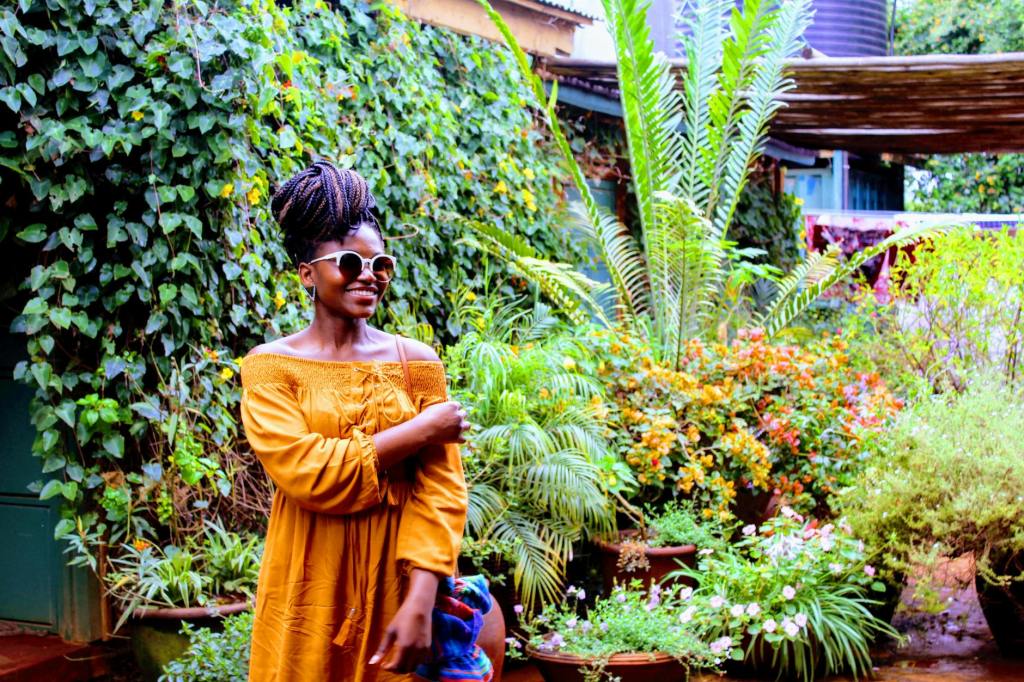
Eldest daughters, we’ve been taught to harvest fast and produce perfection. But this kind of magic? The slow magic of commitment, clarity, and care? It’s worth the wait. So water wisely. Love deliberately. And remember—it ain’t always about you… sometimes it’s just a seed becoming a garden.


Leave a Reply