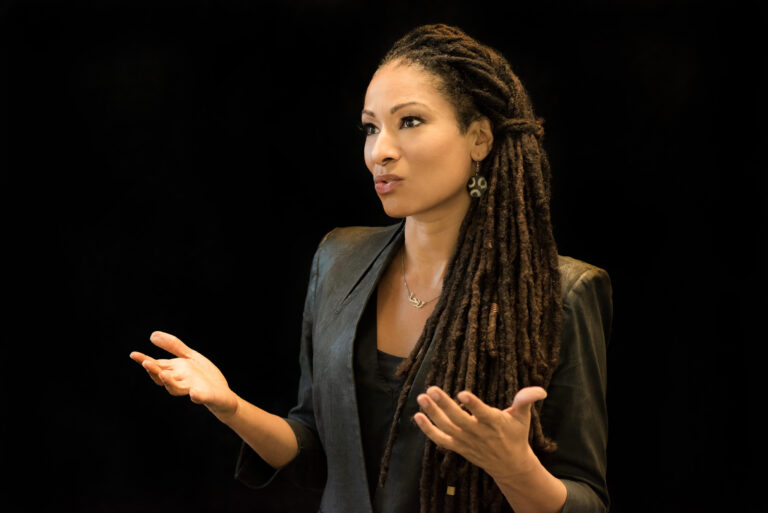
The question, is inclusion enough?, lies at the heart of the firestorm ignited by Trevor Noah’s recent podcast episode featuring Professor Ruha Benjamin. Their discussion about integration versus segregation, particularly a short, out-of-context clip circulating online, led to accusations of racism against Noah, with some even absurdly labeling him a member of the KKK. This backlash underscores the crucial need for a more nuanced understanding of the conversation, which the full 90-minute interview, available on ‘What Now? with Trevor Noah,’ provides

The Breakdown
Noah and Benjamin delve into the complexities of integration and DEI initiatives, exploring their limitations and unintended consequences. They question whether simply being included in previously segregated spaces is sufficient, or if these initiatives truly address the underlying power dynamics. They discuss, for example, how universities often honor figures whose voices they actively tried to silence in the past, highlighting the performative nature of some institutional acknowledgements.
Benjamin shares a powerful personal anecdote about being a Black woman in a position of power within her institution. She describes the pressure to represent the institution in difficult conversations, essentially becoming the “voice of the oppressor” under the guise of DEI.
This resonates deeply with many Black professionals, particularly Black women, who have experienced similar situations in corporate America and other predominantly white spaces. They describe being tasked with handling “difficult” customers or situations, often reinforcing harmful stereotypes and leaving them vulnerable to accusations of being “angry” or “aggressive.” The podcast illustrates how integration and DEI can be used to tokenize individuals, placing them in positions that perpetuate existing stereotypes rather than dismantling them. This dynamic is often missed in simplistic discussions of inclusion.
Noah’s question about the merits of integration must be understood within this complex context. He isn’t advocating for a return to segregation. Rather, he’s prompting a critical examination of what integration has actually achieved. He’s asking whether the goal was merely access to previously segregated spaces, or a more profound shift in power and equality.
Here’s the thing…
They raise the valid point that sometimes the spaces fought for weren’t as transformative as anticipated. This echoes a popular meme depicting a Black man who fought for the right to eat at a whites-only establishment, only to be disappointed by the food once he gained access. This humorous, yet poignant, image underscores the idea that access alone doesn’t guarantee a positive or equitable experience. It highlights the difference between formal inclusion and true belonging.
The backlash against Noah stems, in part, from the historical misuse of arguments about “separate but equal,” which were used to justify segregation. This makes discussions about integration particularly sensitive and prone to misinterpretation. However, avoiding these difficult conversations only perpetuates the problem.
The podcast doesn’t offer simplistic solutions. It’s a nuanced exploration of the complexities of race, power, and social change. It challenges listeners to think critically about the limitations of current approaches to diversity and inclusion, and to consider whether simply “being included” is the ultimate goal. It’s not about rejecting integration, but demanding more from it. It’s about asking what kind of spaces we are integrating into, and whether those spaces are genuinely equitable and empowering.
Listen to the full podcast and share your thoughts in the comments. What are your experiences with integration and DEI initiatives? How can we move beyond simply “checking boxes” to create truly inclusive and equitable environments?
My Personal Opinion:
Okay, so I just listened to Trevor Noah’s podcast with Ruha Benjamin, and wow, it really got me thinking. You know how we’ve always been told that integration and DEI initiatives are the answer to racism? Well, this conversation made me realize something: maybe we got it wrong. Like, really wrong.
I completely agree with the idea that just being included isn’t enough anymore. We’ve seen how integration has played out, and honestly, it hasn’t exactly been the magic bullet we hoped for. Sure, we’re in the room now, but are things actually better? Sometimes it feels like we’re just there to be seen, to give the illusion of progress, while the real power dynamics stay the same. It’s like we’re given a seat at the table, but we’re still not allowed to actually eat. We’re still dealing with microaggressions, tokenism, and all sorts of other BS. It’s like we’re integrated, but not equal.
And that’s where this whole idea of voluntary segregation comes in. Now, before you jump to conclusions, I’m not talking about the racist, Jim Crow-era segregation. Absolutely not. What I’m thinking about is something completely different. What if we started creating spaces based on shared values? Not race, not gender, not any of that. But what if we came together with people who share our vision for the world, our morals, our goals? People who understand us on a deeper level? People who want to build the same kind of future?
Think about it.
Wouldn’t it be powerful to create communities where we’re not constantly fighting for our voices to be heard, where we’re not constantly having to explain our experiences to people who just don’t get it? Wouldn’t it be amazing to be in spaces where we can just be, surrounded by people who lift us up and support us?
This isn’t about excluding anyone. It’s about creating spaces where we can truly thrive, where we can build our power and then use that power to make real change in the larger world. It’s about choosing who we spend our energy with, and focusing on building the kind of world we actually want to live in. I’m not saying it’s the only answer, but it’s definitely something worth exploring. What do you guys think? Am I totally off base here, or is there something to this idea? Let’s talk about it.


Leave a Reply